Evaluation of Yeast Strain Diversity from Wild Edible Fruits for Wine Making Process
Nandish G
Department of P. G. Studies and Research in Microbiology, Bioscience Complex, Jnanasahyadri, Kuvempu University, Shankaraghatta – 577 451, Karnataka, India.
Akarsh S
Department of P. G. Studies and Research in Microbiology, Bioscience Complex, Jnanasahyadri, Kuvempu University, Shankaraghatta – 577 451, Karnataka, India.
Dhanyakumari Y
Department of P. G. Studies and Research in Microbiology, Bioscience Complex, Jnanasahyadri, Kuvempu University, Shankaraghatta – 577 451, Karnataka, India.
Nanditha B H
Department of P. G. Studies and Research in Microbiology, Bioscience Complex, Jnanasahyadri, Kuvempu University, Shankaraghatta – 577 451, Karnataka, India.
Thippeswamy B *
Department of P. G. Studies and Research in Microbiology, Bioscience Complex, Jnanasahyadri, Kuvempu University, Shankaraghatta – 577 451, Karnataka, India.
*Author to whom correspondence should be addressed.
Abstract
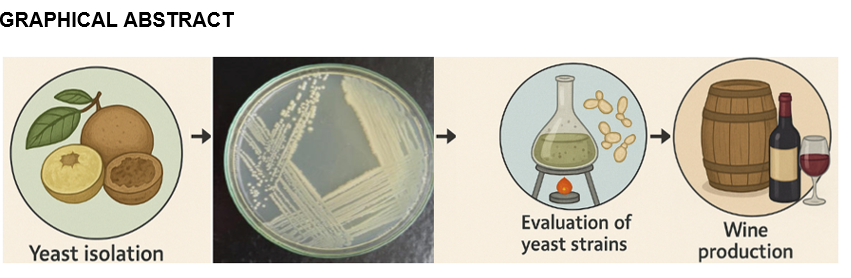
Phyllanthous emblica L. (popularly known as amla or Indian goose berry) is an ephemeral tree belonging to the Euphorbiaceae family and Woodapple, also known as Feronia limonia or Limonia acidissima, is an underutilized dry land fruit crop, also known as kitha, kaintha bel, kothbel, and monkory fruits. In current study, the fresh fruit sample of amla and wood apple were collected from their natural habitat near Harapanahalli, Davangere district. The isolation of yeast involved serial dilution followed by plating techniques, including spread plate and streak plate methods, to assess morphology and recovery. The isolated yeast strain was identified through morphological and biochemical characterization and further confirmed by genomic characterization using 16S rRNA gene sequencing. It was deposited in GenBank, NCBI, and identified as Pichia cecembensis strain KUMBSRNGBT-115 with the accession number PQ316097. Biochemical analysis included pH determination, which indicated an acidic condition at pH 3.5, and reducing sugar estimation using the DNS method, which showed 0.35 mg/mL for wood apple and 0.42 mg/mL for amla. Titratable acidity was measured, with values of 0.9 mg/mL for amla and 1.5 mg/mL for wood apple. The phenol (tannin) content was estimated to be 0.24 mg/mL for amla and 0.64 mg/mL for wood apple. The fermentation process was successful, characterized by carbon dioxide production and sugar reduction, indicating the yeast's ability to convert fruit sugars into alcohol. The sugar content in the fruit must significantly influence the alcohol yield and the production of secondary metabolites like phenols, which contributed to the wine's flavor and health benefits.
Keywords: Phyllanthous emblical L, Feronia limonia, GenBank, Pichia cecembensis, reducing sugar, titrable acidity